Posts

Showing posts with the label bibliography of scientist

Biography of Albert Einstein

Image
Albert Einstein was born at Ulm, in Württemberg, Germany, on March 14, 1879. Six weeks later the family moved to Munich, where he later on began his schooling at the Luitpold Gymnasium. Later, they moved to Italy and Albert continued his education at Aarau, Switzerland and in 1896 he entered the Swiss Federal Polytechnic School in Zurich to be trained as a teacher in physics and mathematics. In 1901, the year he gained his diploma, he acquired Swiss citizenship and, as he was unable to find a teaching post, he accepted a position as technical assistant in the Swiss Patent Office. In 1905 he obtained his doctor's degree. During his stay at the Patent Office, and in his spare time, he produced much of his remarkable work and in 1908 he was appointed Privatdozent in Berne. In 1909 he became Professor Extraordinary at Zurich, in 1911 Professor of Theoretical Physics at Prague, returning to Zurich in the following year to fill a similar post. In 1914 he was appointed Director of the...
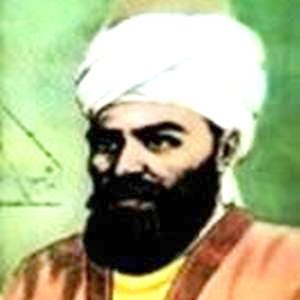
Biography of Al-Farghani

Image
Abu’l-Abbas Ahmad ibn Muhammad ibn Kathir al-Farghani, born in Farghana, Transoxiana, was one of the most distinguished astronomers in the service of al-Mamun and his successors. He wrote "Elements of Astronomy " (Kitab fi al-Harakat al-Samawiya wa Jawami Ilm al-Nujum i.e. the book on celestial motion and thorough science of the stars), which was translated into Latin in the 12th century and exerted great influence upon European astronomy before Regiomontanus. He accepted Ptolemy’s theory and value of the precession, but thought that it affected not only the stars but also the planets. He determined the diameter of the earth to be 6,500 miles, and found the greatest distances and also the diameters of the planets. Al-Farghani’s activities extended to engineering. According to Ibn Tughri Birdi, he supervised the construction of the Great Nilometer at al-Fustat (old Cairo). It was completed in 861, the year in which the Caliph al-Mutawakkil, who ordered the construction, ...

Biography of Adolf Wilhelm Hermann Kolbe

Image
G erman chemist, generally regarded as the founder of modern organic chemistry with his synthesis of acetic acid (ethanoic acid) – an organic compound – from inorganic starting materials. He was first to apply electrolysis to organic synthesis. Kolbe electrolysis of fatty (alkanoic) acids was the first known electrochemical synthesis. Kolbe was a German chemist. He was born near Gottingen and educated there. Kolbe studied for three years (1838-42) with Friedrich Wohler, and then served as an assistant of Robert Wilhelm Bunsen at the University of Marburg in 1842. After one year in Marburg, Kolbe obtained his PhD for work originally begun under Wohler’s direction. Kolbe remained as Bunsen’s assistant for a total of three years (1842-45). He spent 2 years (1845-46) at the London School of Mines, England, being an assistant to Lyon Playfair. From 1847 to 1851 Kolbe was engaged in editing the Handworterbuch der reinen und angewandten Chemie ( Dictionary of Pure and Applied Chemistry) w...

Biography of Abul Wafa Muhammad Al-Buzjani

Image
A bul Wafa Muhammad Ibn Muhammad Ibn Yahya Ibn Ismail al-Buzjani was born in Buzjan, Nishapur in 940 C.E. He flourished as a great mathematician and astronomer at Baghdad and died in 997/998 C.E. He learnt mathematics in Baghdad. In 959 C.E. he migrated to Iraq and lived there till his death. Abul Wafa’s main contribution lies in several branches of mathematics, especially geometry and trigonometry. In geometry his contribution comprises solution of geometrical problems with opening of the compass; construction of a square equivalent to other squares; regular polyhedra; construction of regular hectagon taking for its side half the side of the equilateral triangle inscribed in the same circle; constructions of parabola by points and geometrical solution of the equations: x4 = a and x4 + ax3 = b Abul Wafa’s contribution to the development of trigonometry was extensive. He was the first to show the generality of the sine theorem relative to spherical triangles. He developed a new method o...

Biography of Abul Hasan Ali Al-Masu’di

A bul Hasan Ali Ibn Husain Ibn Ali Al-Masu’di was a descendant of Abdallah Ibn Masu’d, a companion of the Holy Prophet (peace be upon him). An expert geographer, a physicist and historian, Masu’di was born in the last decade of the 9th century C.E., his exact date of birth being unknown. He was a Mutazilite Arab, who explored distant lands and died at Cairo, in 957 C.E. He travelled to Fars in 915 C.E. and, after staying for one year in Istikhar, he proceeded via Baghdad to India, where he visited Multan and Mansoora before returning to Fars. From there he traveled to Kirman and then again to India. Mansoora in those days was a city of great renown and was the capital of the Muslim state of Sind. Around it, there were many settlements/townships of new converts to Islam. In 918 C.E., Masu’di traveled to Gujrat, where more than 10,000 Arab Muslims had settled in the sea-port of Chamoor. He also travelled to Deccan, Ceylon, Indo-China and China, and proceeded via Madagascar, Zanjibar an...

Biography of Abu Marwan IBN Zuhr

Image
A bu Marwan Abd al-Malik Ibn Zuhr was born at Seville in 1091/c. 1094 C.E. After completing his education and specializing in medicine, he entered the service of Almoravides (Al-Murabatun), but after their defeat by the Al-Mohades (Al-Muwahadun), he served under ‘Abd al-Mu’min, the first Muwahid ruler. He died in Seville in 1161/c. 1162 C.E. As confirmed by George Sarton, he was not a Jew, but an orthodox Muslim. Ibn Zuhr was one of the greatest physicians and clinicians of the Muslim golden era and has rather been held by some historians of science as the greatest of them. Contrary to the general practice of the Muslim scholars of that era, he confined his work to only one field medicine. This enabled him to produce works of everlasting fame.

Biography of Abu Ali Hasan Ibn Al-Haitham

Image
A bu Ali Hasan Ibn al-Haitham was one of the most eminent physicists, whose contributions to optics and the scientific methods are outstanding. Known in the West as Alhazen, Ibn al-Haitham was born in 965 C.E. in Basrah, and was educated in Basrah and Baghdad. Thereafter, he went to Egypt, where he was asked to find ways of controlling the flood of the Nile. Being unsuccessful in this, he feigned madness until the death of Caliph al-Hakim. He also travelled to Spain and, during this period, he had ample time for his scientific pursuits, which included optics, mathematics , physics, medicine and development of scientific methods on each of which he has left several outstanding books. He made a thorough examination of the passage of light through various media and discovered the laws of refraction. He also carried out the first experiments on the dispersion of light into its constituent colours. His book Kitab-al-Manadhir was translated into Latin in the Middle Ages, as also his book...

Biography of Abu Al-Qasim Al-Zahravi

Image
A bul Qasim Khalaf ibn al-Abbas al-Zahravi (known in the west as Abulcasis) was born in 936 C.E. in Zahra in the neighbourhood of Cordova . He became one of the most renowned surgeons of the era and was physician to King Al-Hakam-II of Spain. After a long medical career , rich with significant original contribution, he died in 1013 C.E. He is best known for his early and original breakthroughs in surgery as well as for his famous Medical Encyclopedia called Al-Tasrif, which is composed of thirty volumes covering different aspects of medical science. The more important part of this series comprises three books on surgery, which describe in detail of surgical treatment as based on the operations performed by him, including cauterization, removal of stone from the bladder , dissection of animals, midwifery, styptics, and surgery of eye, ear and throat . He perfected several delicate operations, including removal of the dead foetus and amputation. Al-Tasrif was first translated by Gherar...

Biography of Abu Al-Nasr Al-Farabi

Image
A bu Nasr Mohammad Ibn al-Farakh al-Farabi was born in a small village Wasij, near Farab in Turkistan in 259 A.H. (870 C.E.). His parents were originally of Persian descent, but his ancestors had migrated to Turkistan. Known as al-Phrarabius in Europe, Farabi was the son of a general. He completed his earlier education at Farab and Bukhara but, later on, he went to Baghdad for higher studies, where he studied and worked for a long time viz., from 901 C.E. to 942 C.E. During this period he acquired mastery over several languages as well as various branches of knowledge and technology. He lived through the reign of six Abbasid Caliphs. As a philosopher and scientist, he acquired great proficiency in various branches of learning and is reported to have been an expert in different languages. Farabi travelled to many distant lands and studied for some time in Damascus and Egypt, but repeatedly came back to Baghdad, until he visited Saif al-Daula’s court in Halab (Allepo). He became one of t...

Biography of Abu Abdullah Al-Battani

Image
A bdallah Muhammad Ibn Jabir Ibn Sinan al-Battani al-Harrani was born around 858 C.E. in Harran, and according to one account, in Battan, a State of Harran. Battani was first educated by his father Jabir Ibn San’an al-Battani, who was also a well-known scientist. He then moved to Raqqa, situated on the bank of the Euphrates, where he received advanced education and later on flourished as a scholar. At the beginning of the 9th century, he migrated to Samarra, where he worked till the end of his life in 929 C.E. He was of Sabian origin, but was himself a Muslim. Battani was a famous astronomer, mathematician and astrologer . He has been held as one of the greatest astronomic of Islam. He is responsible for a number of important discoveries in astronomy, which was the result of a long career of 42 years of research beginning at Raqqa when he was young. His well-known discovery is the remarkably accurate determination of the solar year as being 365 days, 5 hours, 46 minutes and 24 seconds...

Biography of Abdul Qadeer Khan

Image
A bdul Qadeer Khan was born into a modest family in Bhopal, India, in 1935. He migrated to Pakistan in 1952, following the country’s partition from India five years earlier. He graduated from the University of Karachi before moving to Europe for further studies in West Germany and Belgium. In the 1970s, he took a job at a uranium enrichment plant run by the British-Dutch-German consortium Urenco. 1976,Zulfiqar Ali Bhutto announces to build "Islamic Bomb ", a bomb for defense of all Islamic Countries. Khan who is in Holland called by Zulfiqar Ali Bhutto to start nuclear program. Khan leaves his highly paid job at a Top Dutch Nuclear firm. Brings knowledge of Enrichment of uranium. Starts the A-Bomb Plane. Threatened for his life by CIA, MOSAD(Israeli intellegence agency) and RAW(Indian Intellegence Agency). Continues the program with very very high secrecy and security. Program is so secret that even CIA failed to get details on Nuclear Activities. In 1983 Khan was sentenc...